1. Introduction: The Strategic Evolution of Weed Suppression Infrastructure
In the hyper-competitive landscapes of commercial agriculture, industrial viticulture, and high-end residential landscaping, the integrity of the ground cover system is the primary determinant of long-term operational viability. Weed suppression is not merely an aesthetic choice; it is a critical infrastructure investment. When a weed suppression sheet (geotextile) fails, the resulting costs are manifold: manual labor for weeding, potential chemical runoff from herbicides, and the systemic degradation of the primary crop’s root zone. The industry required an evolution from “consumable fasteners” to “engineered anchoring systems. This document provides a deep-dive analysis into the engineering, utility, and market-leading performance of the DAIM Flip-Washer Staples. Manufactured by Daiichi Vinyl Co., Ltd. (DAIM) that a specialist company dedicated to professional-grade gardening products. This product represents a paradigm shift in installation technology. By focusing on the “ease” or “convenient” philosophy, DAIM has engineered a solution that addresses the physical mechanics of soil anchoring while simultaneously optimizing the economic value of labor time. The following sections will evaluate the design breakthroughs, material science, and strategic deployment scenarios that have earned this product the No.1 ranking on major Japanese home centers and EC platforms, illustrating why the DAIM Flat-Type pin is the definitive standard for modern weed control infrastructure.
2. Design Innovation: The Mechanics of the “Flat-Type” Architecture
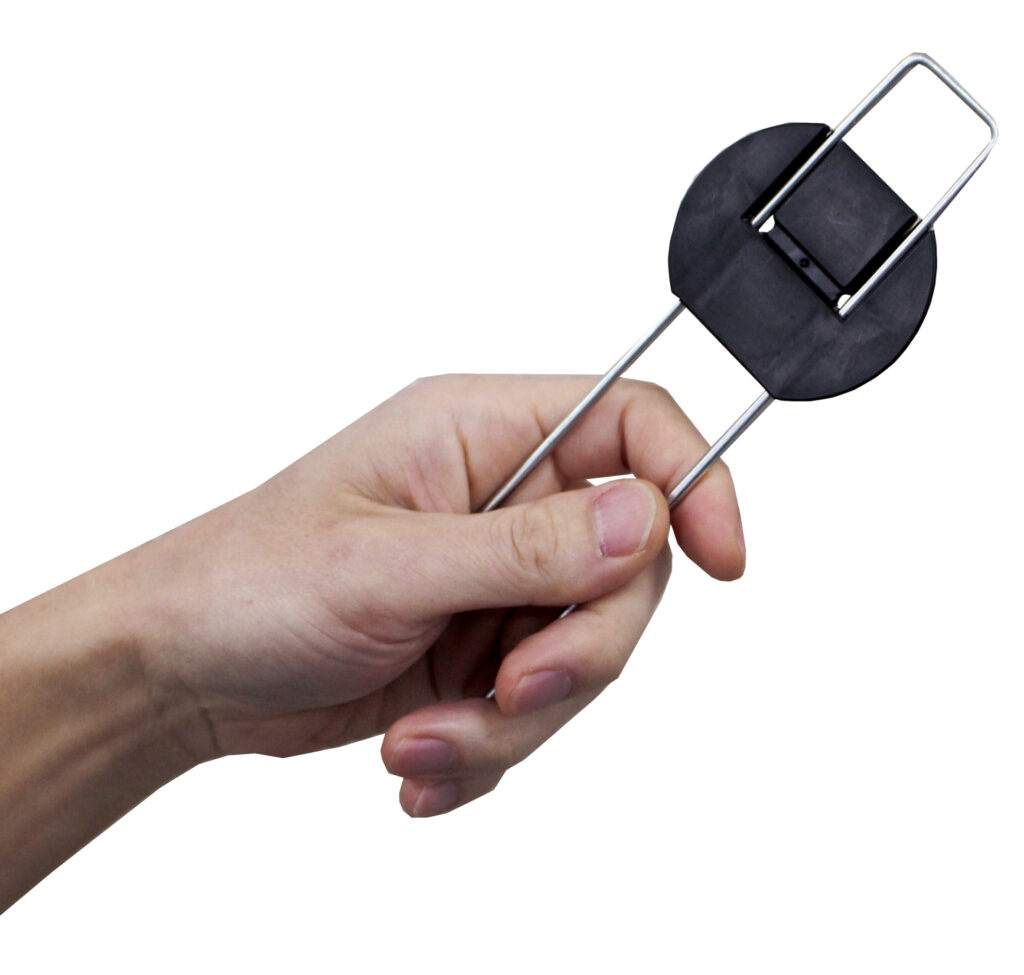
The most transformative feature of the DAIM Flip-Washer Staples is its “Flat-Type” architecture. To the layperson, a pin head is a minor detail; to an engineering consultant, it is the interface between the anchoring hardware and the environment. DAIM’s innovation moves toward a “flush-finish” or “flat” architecture, which provides structural and safety benefits that far exceed the capabilities of standard pins.
The Superiority of the “U-Shaped”
The mechanical core of the DAIM pin is the “U-shaped” configuration. Unlike single-point stakes that rely on the narrow frictional resistance of a single shaft, the U-shaped pin utilizes two parallel iron shafts. This provides:
- Rotational Stability: In sandy or loose soils, a single-point stake acts as a pivot. Wind-induced vibration in the weed sheet can cause a single stake to rotate, enlarging the puncture hole until the sheet eventually slips over the head. The U-shaped geometry locks the pin into a specific orientation, preventing any lateral or rotational movement.
- Resistance to the “Seesaw” Effect: Traditional pins often tilt when side-loaded. The DAIM U-shape distributes the downward clamping force across a wider surface area, ensuring the plate remains parallel to the soil. This prevents the “seesaw” motion where one side of a fixing plate digs into the sheet while the other side lifts, creating a point of entry for light and air.
The “Flat Plate” and the Elimination of Protrusion
A protruding pin head is a liability. In commercial landscaping, where foot traffic and equipment movement are constant, high-profile pins are primary tripping hazards. From a risk management perspective, the DAIM Flat-Type pins significantly reduce the potential for workplace accidents. Furthermore, for those managing large-scale turf or garden projects, the low-profile head allows for the operation of lawnmowers or motorized carts directly over the sheet without the risk of blade damage or the violent ejection of metal pins.
The “Micro-Ecosystem” and Soil Accumulation Prevention
A critical, often overlooked failure in weed suppression is the accumulation of soil on top of the sheet. Traditional pins with raised heads or “warped” edges create small pockets—micro-voids—where dust and debris collect. Over time, these pockets trap moisture and seeds, creating a “perched seedbed” on top of the weed sheet.
- The DAIM Edge: The DAIM Flat-Type plate is designed to sit perfectly flush against the sheet. Because the plate is rigid and lacks the upward “rebound” found in cheaper plastic washers, it eliminates the capillary gap where dirt can settle. This maintains a sterile, debris-free surface, ensuring the sheet’s suppression properties are not bypassed by top-down weed growth.
3. Operational Efficiency: The Value of the Integrated Assembly
In agricultural engineering, we view human labor as the most volatile and expensive variable. On a project requiring thousands of anchor points, the speed of installation per unit is the primary driver of project profitability. The DAIM Flat-Type system is designed to eliminate the logistical “friction” associated with traditional separate-component hardware.
The Strategic “So What?” of Pre-Assembly
Traditional systems ship pins and plates as separate components. This requires the installer to manually slide each plate onto each pin—a process that is not only time-consuming but ergonomically taxing.
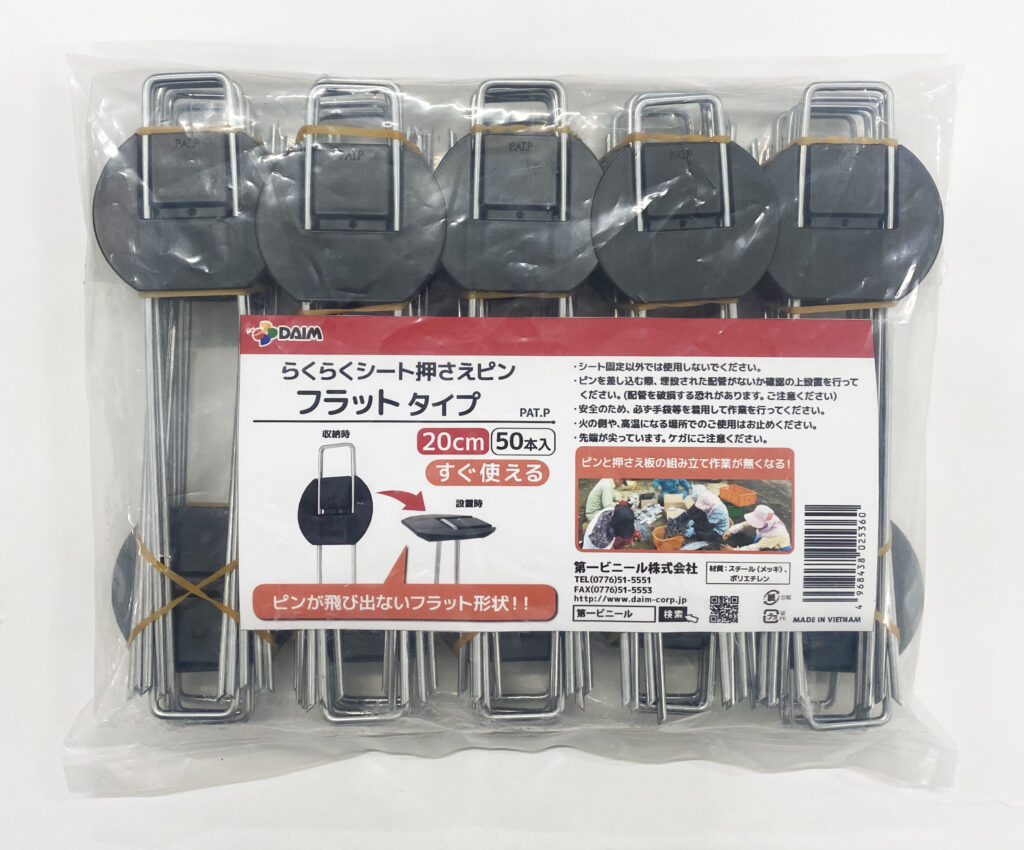
- The DAIM Advantage: The DAIM Flip-Washer Staples are delivered “Pre-Assembled” (Plate + Pin integrated).
- Labor Efficiency: This eliminates the manual sorting and assembly phase. In a project requiring 3,000 pins, and assuming 5 seconds for manual assembly per pin, the DAIM system saves over 4 hours of pure manual labor just in preparation.
- Loss Prevention: In field conditions, dropping a separate black plate in the dirt often results in its loss. Pre-assembly ensures the integrity of the kit from the warehouse to the final strike of the hammer.
4. Technical Specifications and Material Science
The difference between a temporary “fix” and permanent “infrastructure” lies in material science. For a weed suppression system to be effective for its projected lifespan, the staples must resist corrosion, UV-induced brittleness, and mechanical deformation.
Comprehensive Technical Specifications
Specification, Detail, Engineering Rationale
Pin Length: Maximum grip in loose/disturbed soils.
Pin Diameter: Optimized gauge for bending resistance and weight.
Plate Dimensions,6 cm (W) x 5 cm (L): Large footprint for pressure distribution.
Pin Material, Iron: High tensile strength and rust-resistant.
Plate Material, Polyethylene (PE): Superior UV and chemical resistance.
Quantity: 10~100 Units per Pack: Professional-scale volume.
Patent Status: Patent Pending, Exclusive design architecture.
5. Deployment Scenarios: From Home Gardens to Professional Agriculture
Strategic deployment of the Flat-Type pin requires an understanding of the environment. While DAIM offers lengths of 15cm and 20cm, the 30cm model is the “heavy-duty” standard required for professional-scale projects and challenging topographies.
The Soil Density Matrix and Pin Selection
As an Agricultural Engineering Consultant, the selection of pin length should be based on the following geotechnical variables:
| Soil Type | Recommended Pin Length | Strategic Rationale |
| Hard-Packed Clay | 15cm – 20cm | High frictional resistance; shorter pins are easier to drive. |
| Loamy Topsoil | 20cm | Standard gardening depth; balanced grip. |
| Sandy / Loose Soil | 30cm | Requires deep engagement to find stability. |
| Freshly Tilled / Volcanic Ash | 30cm | High “lift” risk; maximum depth is required for anchoring. |
Strategic Use Case: High-Wind Coastal and Sloped Environments
In areas prone to high winds, a weed suppression sheet acts like a sail. Bernoulli’s principle dictates that as wind moves over the sheet; it creates an uplift force. If the anchors are too shallow, they are pulled from the ground by this continuous tension. The 30cm DAIM pin provides “Deep-Root” anchoring. By reaching 30cm into the soil, the pin engages with the more stable, compacted subsoil layers that are unaffected by surface moisture or wind-induced vibration.
Strategic Use Case: High-Aesthetic Architectural Landscaping
For projects where the weed sheet is a sub-layer for gravel, mulch, or decorative stone, the Flat-Type plate is essential. Traditional protruding heads create “pressure points” in the decorative layer, causing gravel to shift or creating unsightly mounds. The 6cm x 5cm flat plate provides a level foundation for top-dressing, ensuring a perfectly smooth, architectural finish that remains stable even under heavy foot traffic. Pro-Tip: Spacing for Maximum Longevity. For industrial applications or high-wind zones, spacing is the key to load distribution. We recommend the “50/100 Protocol”:
- Perimeter: Pins at 50cm intervals to prevent wind ingress under the sheet edges.
- Interior: Pins at 100cm intervals in a staggered “checkerboard” pattern.
- Overlap Zones: Ensure the 30cm pins penetrate both layers of the sheet at overlap points to create a unified moisture and light barrier.
6. Competitive Landscape and Market Leadership
In the consumer and professional market, technical excellence is validated by commercial performance. The DAIM Flip-Washer Staples currently holds the No.1 ranking in Japanese home center stores and the “Agricultural Sheet Pins” category on Yahoo Shopping. This market leadership is not merely the result of branding; it is a reflection of the product’s superior balance between engineering quality and cost-effectiveness.
The Multi-variation Package
DAIM has strategically positioned the 10~100-count package to meet the needs of the “New and Serious Home Gardener” and the “Commercial Contractor.”
The “Patent Pending” right
The “Patent Pending” status of this product is a critical signal to the market. It indicates that Daiichi Vinyl has developed unique proprietary methods for integrating the flat plate with the U-shaped iron pin. In a market flooded with generic clones, the patent status provides the end-user with the assurance that they are investing in the current “gold standard” of fixing hardware—technology that competitors cannot legally replicate. This exclusivity ensures that the design is optimized for performance, not just for cheap manufacturing.
7. Conclusion: The Definitive Choice for Modern Weed Control
The DAIM Flip-Washer Staples is the culmination of agricultural engineering and operational pragmatism. It addresses every systemic failure of traditional anchoring systems, from the “seesaw” instability of single stakes to the safety hazards of protruding heads. By synthesizing the following core advantages, DAIM has created a tool that transcends the category of “gardening supplies”:
- Structural Superiority: 15~30cm depth provide unmatched stability in different soil environments.
- Operational Time-Savings: Pre-assembled units and sword-point tips dramatically reduce labor costs and installer fatigue.
- Long-Term Infrastructure: The use of durable materials ensure that the anchor remains functional for the entire lifecycle of the weed suppression sheet.
- Strategic Safety: The flat, flush-finish architecture eliminates liability risks and allows for seamless equipment operation. For the professional contractor, the DAIM Flat-Type pin is a risk-mitigation tool. For the home gardener, it is the key to a beautiful, maintenance-free landscape. The DAIM Flip-Washer Staples is not just a consumable; it is a strategic investment that protects the integrity of the soil and the value of the landscape. For a professional-grade finish that lasts, the choice of anchor is as important as the sheet itself. The industry standard has been set: choose the DAIM Flip-Washer Staples for a result that is truly convenient.
You can find more information on the DAIM Amazon Store.